
ISSN: 2174-7563

The journal only accepts for blind peer review those research works that, if they have had experiments carried out with people and/or animals, have been carried out under the ethical standards and principles established by the Declaración de Helsinky as well as the World Medical Association. World Medical Association
Said works must provide the approval of a regional or national Ethics Committee that approves the experiments with animals or clinical trials carried out with patients, as well as the prior informed consent of each of the participants.
In the article, the authorization of the institutional committee as well as the consent of the participants will be reflected in the methodologies section. Maintaining a balance in the percentage of women and men that make up the Management bodies, Guest Editors, Editorial Board and Advisory Board. Make a more diverse and inclusive publication and that is why the URJC belongs to the Network of Universities for Diversity and has created a sexual and cultural ethnic diversity unit. We maintain a percentage, at least 40% of women as reviewers of the works sent to the journal. Use inclusive language in communications with the authors of scientific articles and request that they also comply.
ISSN: 2174-7563
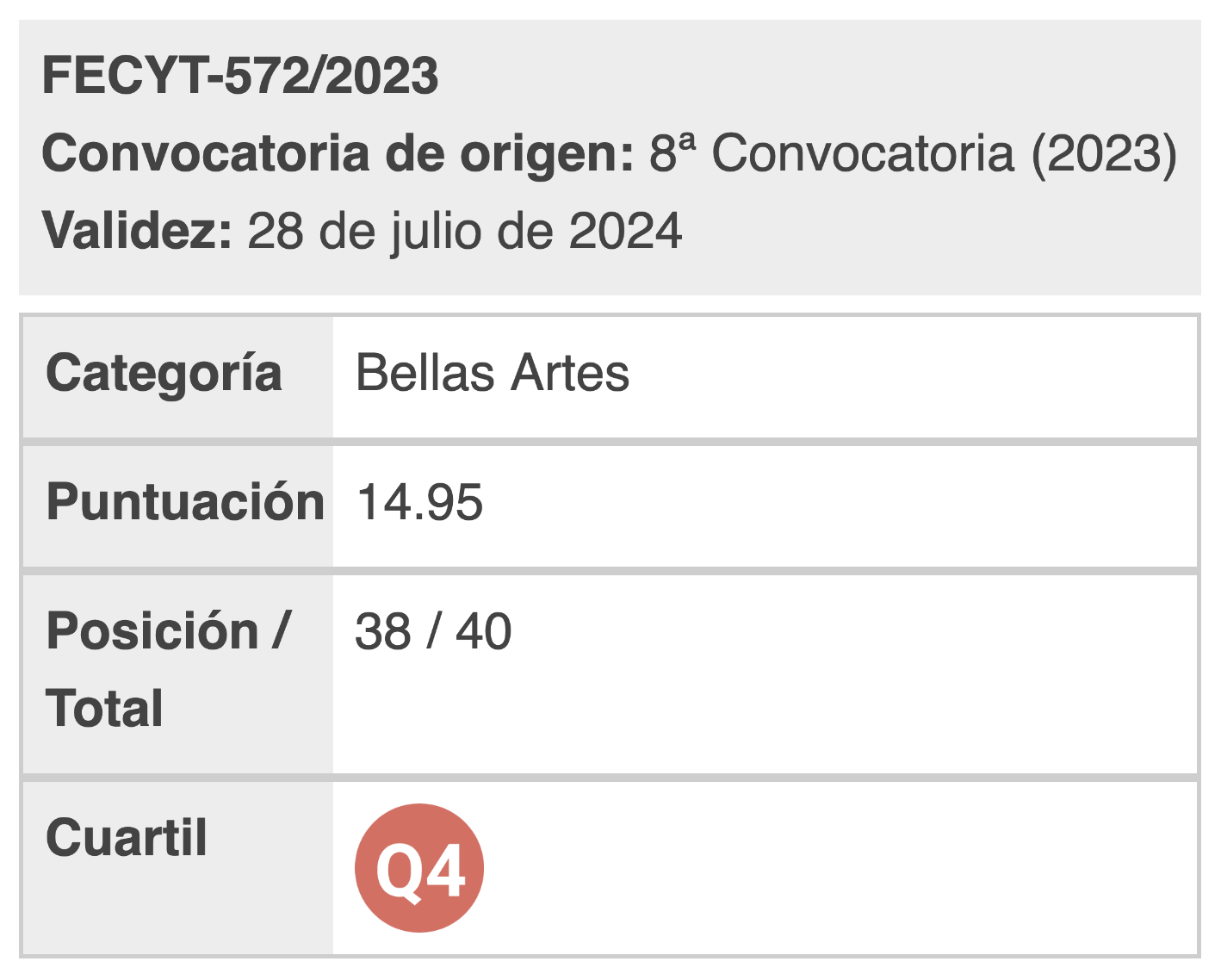












ASRI. Art and Society. Research journal in Art and Digital Humanities. ISSN: 2174-7563, edited by the Publications Service of the Rey Juan Carlos University.
It is an online publication coordinated by the CUVPAC research group of Rey Juan Carlos University, and It is open access, free, and entirely free for readers and authors. The magazine does not require a subscription fee, nor does it require any payment from the authors to publish and access the content.

This work is licensed under a Creative Commons Attribution 4.0 International License. Creative Commons Attribution 4.0 International License.

The contents may be read and used, copied, distributed, transmitted, publicly displayed or transformed, provided that they comply with the following terms:
Authors are encouraged and allowed to spread the contents of the journal on their social networks and electronic publications (with their logos, pagination, an indication of the volume and number of the journal, ISSN, included), to favor its circulation and dissemination and with this, a possible increase in its citation and reach among the academic community.
Publications Service of the Rey Juan Carlos University. Paseo de Artilleros, s/nº, 28032 MADRID (Spain)