
ISSN: 2174-7563

CONCEPTUAL DEFINITION
To carry out these equality policies, we carry out these specific actions:
ISSN: 2174-7563
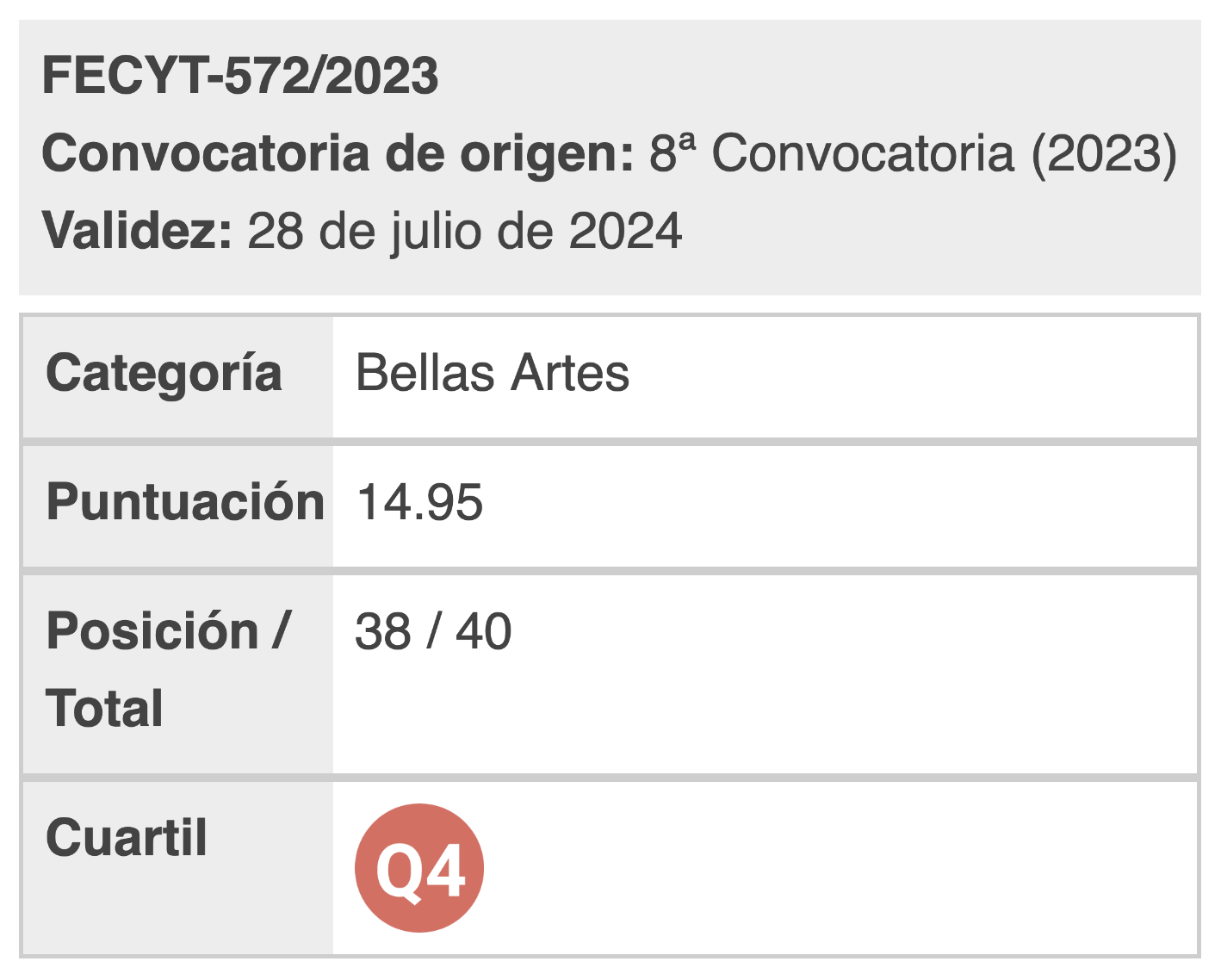
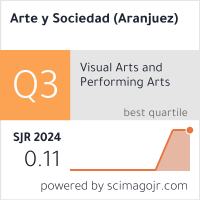













ASRI. Art and Society. Research journal in Art and Digital Humanities. ISSN: 2174-7563, edited by the Publications Service of the Rey Juan Carlos University.
It is an online publication coordinated by the CUVPAC research group of Rey Juan Carlos University, and It is open access, free, and entirely free for readers and authors. The magazine does not require a subscription fee, nor does it require any payment from the authors to publish and access the content.

This work is licensed under a Creative Commons Attribution 4.0 International License. Creative Commons Attribution 4.0 International License.

The contents may be read and used, copied, distributed, transmitted, publicly displayed or transformed, provided that they comply with the following terms:
Authors are encouraged and allowed to spread the contents of the journal on their social networks and electronic publications (with their logos, pagination, an indication of the volume and number of the journal, ISSN, included), to favor its circulation and dissemination and with this, a possible increase in its citation and reach among the academic community.
Publications Service of the Rey Juan Carlos University. Paseo de Artilleros, s/nº, 28032 MADRID (Spain)