













ISSN: 2174-7563

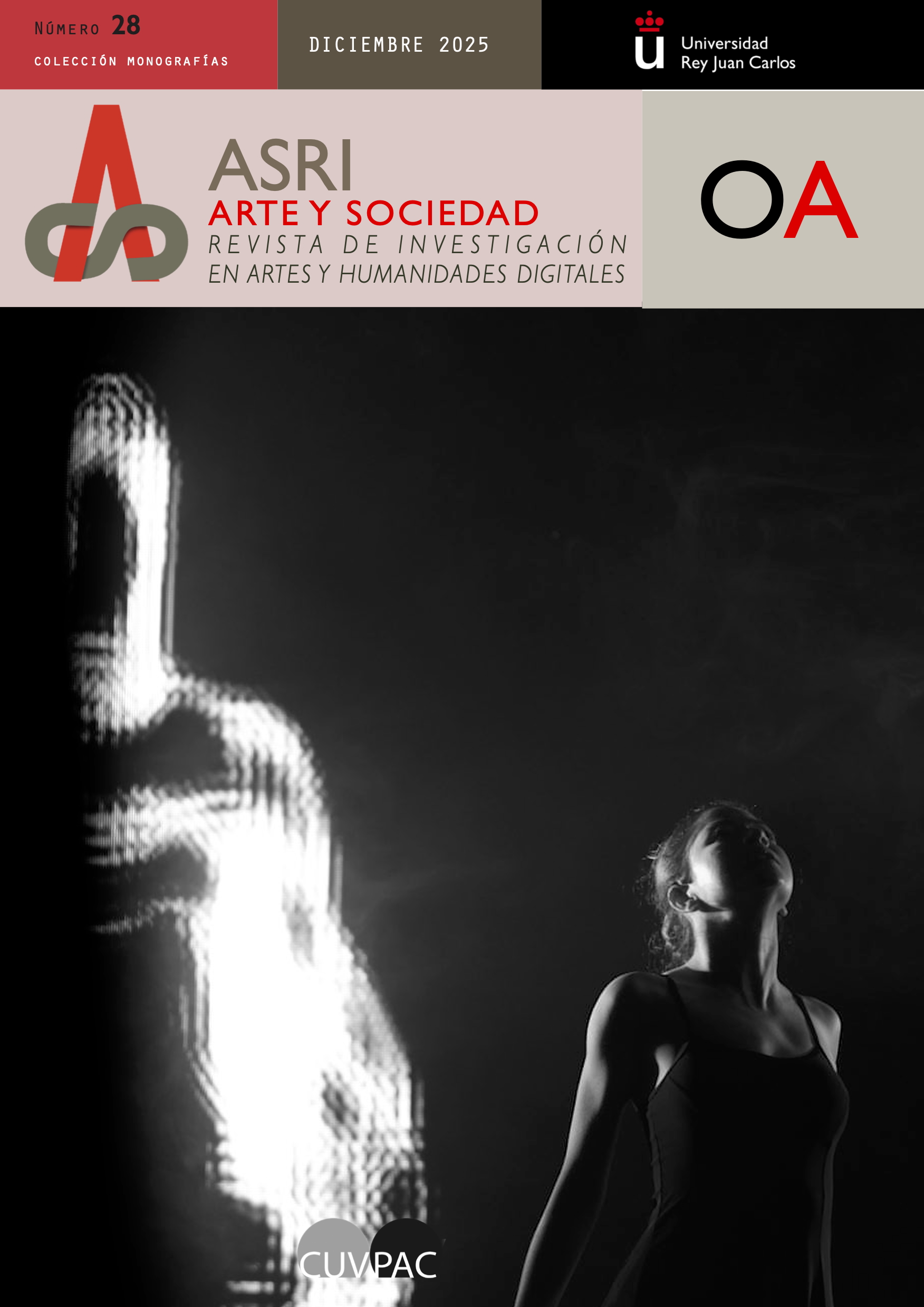
This special issue presents a multidisciplinary and transversal analysis of the new spatiality that has been emerging since the 1980s, and especially during the 21st century, in various scenographic installations (artistic, cultural, performing, and audiovisual), due to the disruptive incorporation of digital software: video mapping, stage robots, sound environments, augmented reality, 3D modeling and projection, 360-degree viewing, holograms, and so on. This innovative multimedia management has fostered previously unthinkable possibilities for expression and visual configurations. The stage becomes as illusionistic and immersive as in Italian theater, while, paradoxically, becoming more interactive. Digital technological resources prolong the scenographic renewal proposed throughout the 20th century, from Appia and Craig to Wilson and Lepage, who expanded the text with the object, the spectator, the light, and the image. This led to the experimentation of new theatre models, such as the Festspielhaus Hellerau (1911) by Tessenow and Dalcroze, Kiesler's Endless Theatre (1924), Gropius's Teatro Total (1926), or Le Corbusier's "espace indicible" (1948), the "boîte à miracles" and the Philips Pavilion (1958). This was followed by the post-avant-garde movements of the 1960s, with the hybrid format of art installations and the prominence of light (Flavin, Turrel, Eliasson) and video (Nam June Paik, Bill Viola). In Italian theatre, multimedia movements such as Nono, Kaslik and Svovoda (Venice 1961), Puecher (Pavia 1967) and Carmelo Bene (Milan 1974) emerged. In the 1980s, the "Electronic Arts Festival" (Rennes, 1988) and the total spectacles of "La Fura dels Baus" and its "Binary Manifesto" were decisive. In the 21st century, software has already enabled dizzying real-time interaction (The Sphere, 2023).
The coordination of this monograph has been made possible thanks to the collaboration of the research groups ESPACIAR (University of Valladolid) and CUVPAC (Rey Juan Carlos University).
ISSN: 2174-7563















ASRI. Art and Society. Research journal in Art and Digital Humanities. ISSN: 2174-7563, edited by the Publications Service of the Rey Juan Carlos University.
It is an online publication coordinated by the CUVPAC research group of Rey Juan Carlos University, and It is open access, free, and entirely free for readers and authors. The magazine does not require a subscription fee, nor does it require any payment from the authors to publish and access the content.

This work is licensed under a Creative Commons Attribution 4.0 International License. Creative Commons Attribution 4.0 International License.

The contents may be read and used, copied, distributed, transmitted, publicly displayed or transformed, provided that they comply with the following terms:
Authors are encouraged and allowed to spread the contents of the journal on their social networks and electronic publications (with their logos, pagination, an indication of the volume and number of the journal, ISSN, included), to favor its circulation and dissemination and with this, a possible increase in its citation and reach among the academic community.
Publications Service of the Rey Juan Carlos University. Paseo de Artilleros, s/nº, 28032 MADRID (Spain)